The Future of MEES for Commercial Property
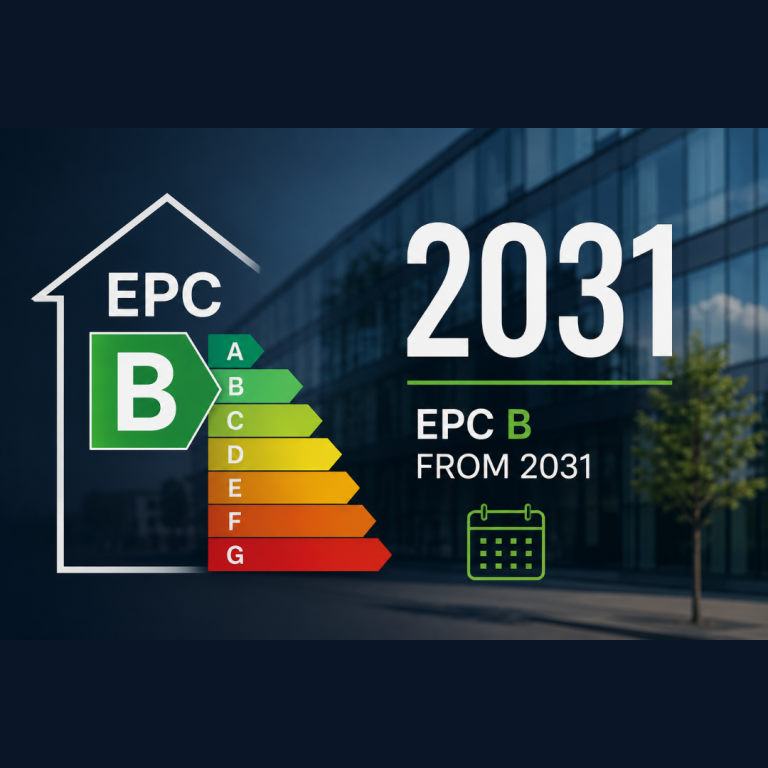
Rob Asquith, Associate Director at Silverstone, explains what the latest MEES update means for landlords, investors and occupiers.
Straight to the Point: 2 minute read
✓ The proposed EPC C milestone has been removed.
✓ EPC B remains the long-term target for rented commercial buildings over 1,000 sq m by 2031 (where cost-effective).
✓ Properties under 1,000 sq m remain subject to the current minimum EPC E standard.
✓ Energy performance continues to influence investment, lending and occupier decisions, regardless of regulation.
✓ Now is a good time to review your portfolio strategy and plan future investment.
Greater Clarity for the Commercial Property Market
The Government has published its interim response on strengthening Minimum Energy Efficiency Standards (MEES) for non-domestic rented properties, providing greater certainty for the commercial property sector.
While legislation is still required before the proposals become law, the response gives landlords, investors and occupiers a much clearer picture of the direction of travel and removes much of the uncertainty surrounding future compliance.
What Has Changed?
The Government has confirmed that:
- EPC B remains the long-term target for larger rented commercial buildings in England and Wales.
- The proposed EPC C milestone in 2027 has been removed.
- Only larger rented buildings (over 1,000 sq m) are currently expected to achieve EPC B by 2031, where improvements are considered cost-effective.
- Smaller commercial properties (under 1,000 sq m) will continue to be subject to the existing minimum EPC E standard.
Overall, the revised approach is more targeted, reducing immediate compliance pressure for many property owners while maintaining the Government's long-term ambition to improve the energy performance of commercial buildings.
What Does This Mean for Property Owners?
For many landlords and investors, this announcement provides welcome certainty and additional flexibility when planning capital expenditure and refurbishment programmes.
However, while regulatory deadlines have shifted, the commercial importance of energy performance has not.
Investors, lenders and occupiers are placing increasing emphasis on EPC ratings when making investment, financing and leasing decisions. Buildings with stronger energy performance are likely to remain more attractive, while poorer-performing assets may continue to face pressure on value, liquidity and occupier demand.
Rather than viewing the announcement as a reason to delay improvements, property owners should use this additional time to take a strategic approach.
Now is a good opportunity to:
- Review EPC ratings across your portfolio.
- Identify opportunities to improve building performance.
- Align energy efficiency works with planned refurbishment programmes.
- Consider how EPC performance could influence future lending, investment and leasing decisions.
How we can help
The Government has taken a more pragmatic approach to MEES, providing much-needed clarity for the market.
While the immediate compliance burden has eased for many, energy performance will continue to play an important role in asset value, tenant demand and investment decisions.
Understanding your portfolio now will help you make informed decisions and protect long-term value.
If you'd like to discuss what the latest MEES update means for your property or portfolio, our building consultancy team would be happy to help.